
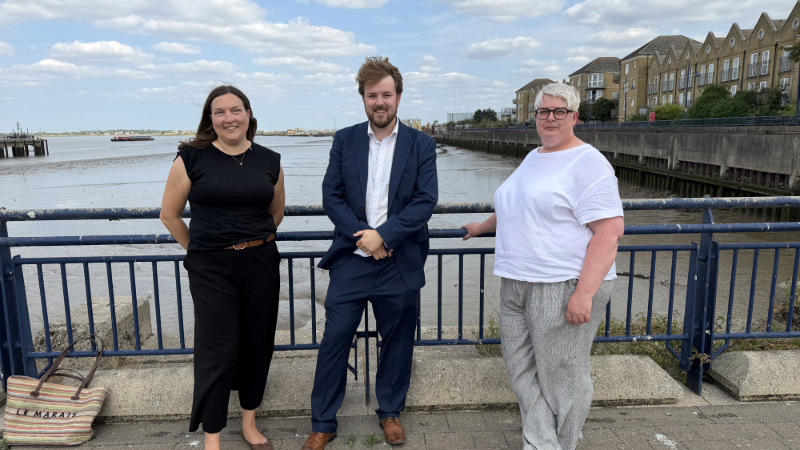
In an innovative collaboration with the Port of London Authority (PLA) the UK’s first intertidal habitat bank will be created in Bexley, benefiting the river, wildlife, and nature’s defence against flooding and coastal erosion.
The habitat bank will be in Erith and will restore and improve the saltmarshes and mudflats increasing biodiversity and delivering long-term benefits for wildlife at no cost to residents.
The move offers developers a way to meet their Biodiversity Net Gain (BNG) requirements which is a legal requirement, meaning they must deliver a 10% measurable improvement in biodiversity when completing a development project.
As the physical habitat creation takes place within Bexley’s river corridor, our borough will directly benefit from external developer funding that will secure environmental improvements in the area.
Deputy Leader of the Council and Cabinet Member for Economic Growth & Infrastructure, Cllr Cameron Smith, said:
This is an exciting project that will help restore nature here in Bexley as the region builds more homes. Our partnership with the Port of London Authority unlocks local saltmarshes and mudflats for environmental improvements. The project will direct developers' contributions to help nature thrive and improve important habitats right here in Bexley, playing a part in reversing biodiversity decline nationwide."
Grace Rawnsley, Director of Sustainability at the Port of London Authority, said:
As a recognised leader in intertidal conservation, we are proud to launch the UK’s first intertidal habitat bank. We have worked hard to design a sustainable programme to restore and improve the saltmarshes and mudflats at Bexley. This will benefit the river, wildlife, and nature’s defence against flooding and coastal erosion. As developers look to invest in the region, local communities can know that biodiversity is being improved at the same time.”