
5. Prosperity, equity and digital futures
Bexley’s prosperity in 2050 will depend not only on economic growth but on whether every resident benefits from that growth. Health and wealth are interdependent: a strong, inclusive economy fuels wellbeing, while good health underpins productivity, civic participation and resilience. To prepare for 2050, Bexley must therefore nurture an economy that is both prosperous and fair, supported by digital innovation that connects, rather than divides communities.
In this sense, skills and employment are not simply economic goals but core building blocks of population health, shaping wellbeing as much as clinical services do.
This chapter examines three intertwined strands of future health: economic prosperity and workforce wellbeing, equity and fairness across neighbourhoods, and digital transformation and innovation. Together they form the engine of a healthier, smarter, and more inclusive Bexley.
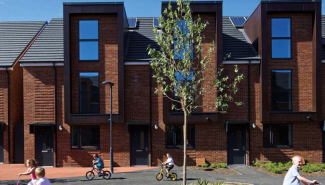
If affordability worsens by 2050, health inequalities will deepen. Younger generations may delay home ownership, older residents could struggle to maintain independence, and vulnerable groups—including migrants and low-income families—may face housing insecurity. These pressures ripple out, affecting workforce productivity, community cohesion, and demand for social care.
Addressing housing affordability is therefore central to Bexley’s vision for prosperity and fairness. Investment in mixed-tenure developments, strong planning policies, and partnerships with housing providers will be vital. Affordable, energy-efficient homes near schools, transport, and green spaces can reduce health risks, support active travel, and build resilience. Without this, economic growth and digital innovation will benefit only a few, leaving others behind.

Across the United Kingdom, productivity losses caused by poor health are estimated to cost the economy more than £100 billion each year, and in Bexley nearly one-third of working-age adults report living with a condition that limits daily activity (London Borough of Bexley, JSNA, n.d.). Ensuring that residents can participate in, and benefit from, future prosperity is therefore a public health priority.
Healthy workplaces play a decisive role in this. Employers that value wellbeing—through flexible working, fair pay, smoke-free environments and support for mental health—see higher retention, lower sickness absence and greater productivity (LBB Growth Strategy). In future, workplaces could also become points of early intervention: staff trained through Making Every Contact Count initiative would be able to spot signs of stress, isolation or unhealthy behaviour and guide colleagues towards support services (ONS, 2021).
Technological change will continue to reshape employment by 2050, automating routine tasks while creating demand for new skills. Without investment in lifelong learning, automation could deepen inequalities, leaving some residents behind in the labour market. Strong partnerships between Bexley College, Jobcentre Plus and the Integrated Care System can provide pathways into new sectors such as green energy, digital technology and care, while tailored work-and-health programmes can help people with long-term conditions to remain in or return to work (PHE, 2019). An inclusive economy is not only fairer — it is healthier.
The same principle should guide regeneration. Large-scale development in North Bexley offers a once-in-a-generation opportunity to design neighbourhoods that promote active travel, green space and access to healthy food (London Borough of Bexley, 2023). Embedding Health Impact Assessments within all major planning applications will ensure that physical and economic growth translate into tangible health benefits for residents (NHS England, n.d.). Prosperity, in this sense, is not just about gross value added but about creating places where people can thrive physically, mentally and socially.
Tackling inequalities and building fairness
Despite its overall affluence, Bexley remains a borough of contrasts. Life expectancy differs by as much as seven years between residents in Thamesmead East and those in Sidcup, and rates of long-term illness, obesity and respiratory disease are consistently higher in the north of the borough (London Borough of Bexley, JSNA, n.d.). These disparities are rooted in the wider determinants of health — housing, income, education, transport, environment and access to good quality health services — and will widen unless partners from across the health, care and voluntary sectors come together to combine their efforts. Strategy 2050 provides a framework to deliver this.
Nationally, the NHS is undergoing major transformation aimed at reducing longstanding health inequalities. The government’s emerging NHS 10‑Year Health Plan commits to “rebuild the NHS in working‑class communities” by directing significant investment towards areas with the greatest health needs, tackling the ‘inverse care law’, and redistributing staff, equipment and funding to deprived communities that have historically experienced poorer health and poorer access to care. Alongside this, national policy emphasises a shift towards prevention, community‑based care, and neighbourhood health centres designed to improve access for those who face the greatest barriers to healthcare. These reforms provide an important national framework within which Bexley partners can coordinate targeted local action to improve fairness and access for all communities (DHSC, 2025).
Reducing inequality also means strengthening the assets that already exist within communities. Local forums, voluntary groups and schools are powerful vehicles for change when given a voice in decision-making. A network of Healthy Neighbourhood Partnerships could bring together residents, GPs, schools and the voluntary sector to identify local priorities — whether improving air quality, promoting safe walking routes, or expanding access to affordable food. Evidence shows that investment in community infrastructure yields significant social returns, improving cohesion, mental wellbeing and civic pride.

Creating fairer environments requires reshaping the physical as well as the social landscape. Access to affordable, nutritious food is uneven across the borough: takeaway outlets cluster around schools in Erith and Belvedere, while fresh-food retailers are scarcer. Planning policies that limit fast-food density near schools and incentivise local greengrocers or community food markets can improve diet quality (The Kings Fund, n.d.). Transport planning should complement this by promoting active travel — well-lit cycle paths, safe crossings and shaded walking routes make it easier for residents to choose movement over car use (ONS, 2022). When neighbourhoods support healthy choices by default, inequality begins to shrink.
Digital health and innovation
The digital revolution presents one of the most transformative opportunities for public health since the introduction of clean water (WHO, n.d.). By 2050, data and technology will underpin how Bexley monitors population wellbeing, delivers care and engages residents. Used responsibly, digital innovation can make services more efficient, more responsive and more equitable. It is vital to address the digital divide both within and between population groups — including differences by age, income, disability and ethnicity — to ensure everyone can benefit equally from digital services, access information, and participate fully in an increasingly digital society.
Projects such as Copilot, an artificial-intelligence tool piloted within Bexley Council already demonstrate how machine-learning can support decision-making by identifying emerging patterns in local data. Predictive analytics can help anticipate outbreaks, model the impact of heatwaves or floods, and inform resource allocation across the Integrated Care System (Bexley ICS internal unpublished document, 2025). At the same time, the South East London Population Health Dashboard links anonymised data from health, housing and social care, enabling targeted support for vulnerable groups — for example, identifying households at risk of fuel poverty or older residents prone to falls (SEL ICB, n.d.).
For residents, platforms like Connected Bexley and Bexley Care Finder become a vital tool in navigating services. However, the benefit of these platforms can only be realised if every resident can access and confidently use digital tools. Currently, around 1 in 10 UK households lack reliable internet access (ONS, 2021) and digital exclusion is most pronounced among older adults and low-income families. Without intervention, digital health could inadvertently widen inequalities, making it essential to embed the Casey Review’s emphasis on trust, transparency and inclusive engagement so that digital transformation strengthens, rather than undermines, equity.
Closing this gap will require coordinated action. Community Digital Health Champions trained through libraries, schools and voluntary organisations can provide one-to-one support, while “Tech Hubs” in community centres could offer free Wi-Fi, loan devices and guidance on online safety. Incorporating digital-health literacy into school curricula would help young people develop critical skills to evaluate online information, reducing the spread of misinformation and promoting responsible self-care.
Emerging technologies will also transform care delivery. Smart-home sensors, wearable monitors and tele-health platforms already enable remote management of long-term conditions (“Connected Bexley – Online Directory,” n.d.).
By 2050, these tools could become standard in supporting older adults to live independently, with data shared securely between patients, carers and clinicians. Early pilot schemes in South East London have shown reductions in hospital admissions and improved satisfaction among users (ONS, 2021). Robust data-governance frameworks and transparent oversight will be essential to maintain public trust and protect privacy as these systems expand.
Ultimately, the power of data lies not just in collecting it but in sharing it meaningfully. We need to work across the council to continue developing open dashboards that present key indicators — life expectancy, physical activity, air quality — in accessible formats (Department for Transport, 2025). When residents can see and understand the data that shapes their environment, they become partners in improving it.
By 2050, a healthy and prosperous Bexley could be recognised by several defining features. Every employer would view wellbeing as a cornerstone of success. Regeneration projects would design out inactivity and isolation. Data and artificial intelligence would guide early intervention and equitable service delivery. All residents, regardless of income or age, would have the digital skills and confidence to manage their own health. And prosperity itself would be measured not only in economic output but in the years of healthy, fulfilling life enjoyed by the people who call Bexley home.
Realising this vision will demand consistent partnership across sectors—local government, the NHS, voluntary organisations, education, and business. Above all, it will require a cultural shift: seeing health not as a separate agenda but as the foundation of everything we hope to achieve by 2050. In that future, prosperity and wellbeing will be one and the same.