Autumn 2026
On 31 March 1926 the Sidcup By-Pass opened, just in time to relieve the high streets of Sidcup and Foots Cray of the Easter holiday traffic.
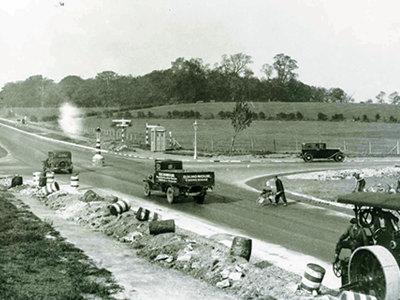
The road was one of several large arterial roads planned by the Ministry of Transport to provide work for many of London’s unemployed. Construction had started in May 1923 and cost a total of £150,000. The two-and-a-half-mile-long stretch linked up with the recently opened Eltham by-pass.
The new road gave motorists from London to Folkestone a way to avoid the notorious Sidcup bottleneck. Traffic congestion in the narrow high streets of Sidcup and Foots Cray had become an increasing problem, particularly at holiday times. It also made life for pedestrians rather perilous.
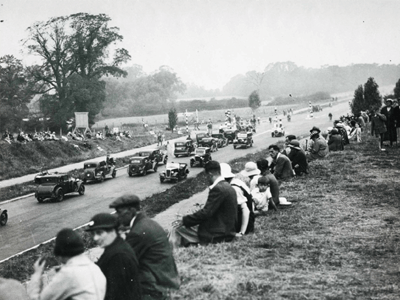
Reporting on the opening of the by-pass, the Sidcup Times of 8 April 1926 commented that ‘many people found holiday amusement in sitting on the high banks with picnics watching the passing traffic and those who walked along the new by-pass road for the first time must have been struck with the beautiful scenery which it opens up’.
When the Sidcup By-Pass Improvement Scheme of 1987 turned the road into a two-lane dual carriageway, its major junctions represented old and new landmarks: Frognal Corner was named after the ancient Frognal House, while Crittalls Corner was named after the nearby steel-framed window factory.

Roadworks at the Frognal junction, 1935
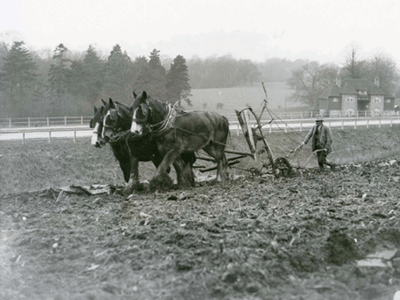
Ploughing land near the by-pass at Frognal, 1935
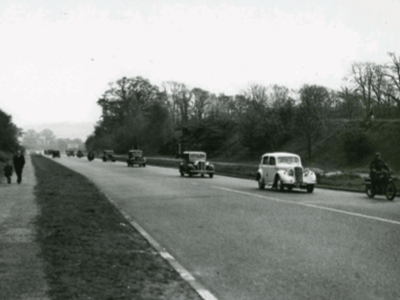
From Frognal towards Ruxley, 1945
Crowds watch the traffic on the Sidcup By-Pass, 1935
On Saturday 7 November at 2.30pm Dr James Wright, FSA will give a talk at Central Library on ‘The Buildings Archaeologist: Discovering the Secrets of Britain’s Ancient Buildings’.
Why do we know so little about the ancient buildings which surround our everyday lives? Tudor or medieval houses are often hidden beneath Georgian or Victorian frontages. What clues are there for discovering the secrets of ancient buildings? How can we investigate the age and social history of houses, castles, churches, mills, factories and warehouses using written records and buildings archaeology? Dr James Wright will explain the fascinating, enigmatic and surprising world of the Buildings Archaeologist.
Location of talk: Central Library, Bexleyheath. Tickets are £5. To book a place please email archives@bexley.gov.uk or visit Bexley Local Studies and Archive Centre.
Dr James Wright, Buildings Archaeologist
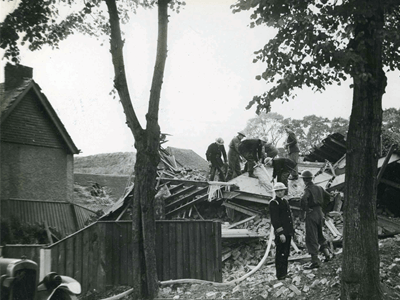
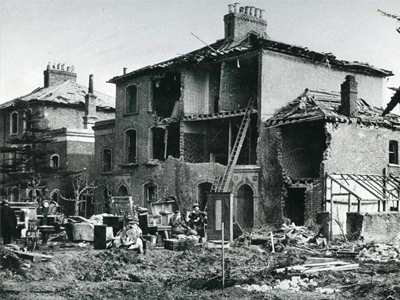
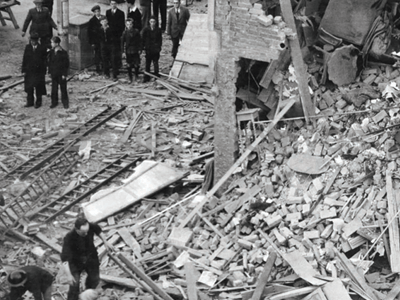
As Bexley prepares to mark Remembrance Sunday in November, it is also an opportunity to reflect on the Borough’s contribution during the Second World War. Communities across Bexley experienced bombing during the Blitz, while local residents served in the Armed Forces, civil defence services and wartime industries. Their courage and sacrifice helped shape the Borough we know today.
Bexley’s archive service continues to preserve and share these stories, regularly highlighting fascinating moments from the Borough’s past, including its wartime history and the people who lived through it.
Residents are invited to join this year’s Remembrance Sunday commemorations on 8 November, with services and wreath-laying ceremonies taking place across the Borough to honour those who gave their lives in service. Further details will be available on the Council’s website and social media channels nearer the time.
Air raid damage at Bourne Road in Bexley
Air raid damage at Woolwich Road in Belvedere 19 March 1941
Air raid damage opposite Christ Church, Bexleyheath
Subscribe to the Archives Highlights newsletter to hear about our programme of talks and walks for 2026.
Or visit us at the Local Studies Centre at Central Library to pick up an events programme.