
4. Ecology and Biodiversity
Policy context
A range of European, national, regional and local legislation, policy and guidance has a bearing on biodiversity conservation. Biodiversity improvements within Bexley contribute to London-wide and national targets for priority species and habitats. These priorities and targets are, therefore, an important factor in setting our local priorities.
Biodiversity 2020: a strategy for England's wildlife and ecosystem services (DEFRA 2011) is focused on landscape-scale conservation. The Environment Act (2021) carries a commitment to monitor progress of the Biodiversity 2020 strategy against a set of defined indicators as published in A Green Future: Our 25 Year Plan to Improve the Environment.
National priority habitats and species are defined in the list of Habitats and Species of Principal Importance in England, identified under Section 41 of the Natural Environment & Rural Communities Act 2006.
A list of priority habitats and species in London can be found on the GLA website. There are London action plans in place for the habitats and some species. The London Environment Strategy sets targets for the areas of priority habitats to be created and enhanced in London by 2025 and 2050.
Bexley Local Plan Policy SP9 Protecting and enhancing biodiversity and geological assets sets out the Council's position on development that would have significant impact on protected or priority species as identified by legislation and Biodiversity Action Plans (BAPs). Policy DP20 Biodiversity and geodiversity in developments outlines how the mitigation hierarchy should be considered and applied. Policy DP21 Greening of development sites requires that developments complement Bexley's green infrastructure network through the retention of existing trees, woodland and hedgerows and through the provision of new, high-quality greening.
London Plan Policy G6 Biodiversity and access to nature outlines a requirement for developers to consider their development's effects on biodiversity from the outset of the design process.
Biodiversity Net Gain (BNG) legislation was introduced by the Government in February 2024 and seeks to leave the natural environment in a better state than it was prior to development. BNG measures must be considered alongside approaches to avoid, mitigate against or compensate for biodiversity losses.
With the introduction of this legislation, there is a requirement for all new development (unless exempt) to deliver at least 10% BNG. Biodiversity value is measured in standardised units using either the full Statutory Metric or where relevant the Small Sites Metric (SSM). The full version of the metric can be used for any development, but the SSM can only be used for minor developments which do not impact upon protected habitats or species.
A brief summary of the BNG requirements is set out in the Design Guide SPD Part 1 - Design Principles and further detail on planning and BNG can be found on the Government BNG guidance collection webpage, where guidance covers several topics including understanding biodiversity net gain, which provides an introduction to those new to BNG.
General guidance
Supporting, enhancing and protecting biodiversity is essential to allowing all to live healthy lives. As such, the Council expects applicants to consider biodiversity from the outset of all development proposals. This should be evidenced during pre-application discussions and in submitted planning information and should include the minimum information needed to assess a development against the mandatory BNG requirements as set out in Article 7 of the Town and Country Planning Order (2015). Information on the proposed strategy to meet the biodiversity gain objective for the development should also be provided.
Applicants should consider how biodiversity and ecological enhancements can be made to support Bexley's Climate Change Action Plan.
Protecting biodiversity
3.1 The following guidance applies to all development sites and conveys the importance of applicants considering how their proposal can impact and enhance Bexley's biodiversity.
3.2 When undertaking development of any scale, all sites, including infill, greenfield or brownfield, will be considered as having potential to support biodiversity. It is vital that wildlife and habitats are considered to avoid habitat loss, fragmentation and the potentially damaging impact of human activity on nature. Development sites can put pressure on different habitats, threatening species classified as 'protected' and 'priority'.
3.3 Prior to starting a project, all applicants, including householders and small developers, should enter details of a development proposal into the Wildlife Assessment Check free online tool, which will determine if expert advice should be sought prior to submitting a planning application.
3.4 Illustrated in D 04 and D 34 of the Design Guide SPD Part 1 - Design Principles, Bexley's Sites of Importance for Nature Conservation (SINC) can also be used as a starting point. However, applicants should be aware that there are a number of other habitat features that either host protected species or contribute towards biodiversity within the borough. Professional advice from a qualified ecologist should therefore be sought if there is any likelihood that these habitats will be impacted by the proposed development.
3.5 Developments that will either directly or indirectly impact a designated site of biodiversity or geodiversity importance; a protected or priority species; or priority habitat will need to submit ecological assessments, surveys and reports with a planning application.
3.6 A suitably qualified ecologist should be appointed to carry out any identified assessments. A Preliminary Ecological Appraisal (PEA) is normally carried out to establish whether any further specific surveys are required, give an early indication of possible mitigations that are likely and point out any initial opportunities for enhancements.
3.7 Undertaking a PEA is not usually sufficient to inform the determination of a planning application (other than under the exceptional circumstances set out in CIEEM guidelines), so in most cases a full Ecological Impact Assessment (EcIA) will be required if there are any indications that the development is likely to affect protected habitats and/or species.
3.8 If required, the EcIA and any associated reports should accompany a planning submission, whether at pre-application stage or with a full planning application.
In line with the five-point mitigation hierarchy, all applicants should answer the following:
Q: Will the development have a negative impact on species and/or habitats present on the development site?
If the answer is yes, applicants need to then answer the following questions:
- a. Can an alternative site for the development be found?
- b. If an alternative cannot be found, can the development be redesigned to avoid harm to species and habitats?
- c. If harm cannot be avoided, can the harm be minimised and mitigated?
If the answer to all three questions is no, it is unlikely that planning permission will be granted.
The five-point mitigation hierarchy
3.9 As outlined in the Context section of the Design Guide SPD Part 1 - Design Principles, the Council will assess development proposals against the five-point mitigation hierarchy.
3.10 Based on Section 5.2 of BS 42020:2013 Biodiversity - Code of practice for planning and development, the hierarchy enables the Council to measure the extent of biodiversity protection that has been incorporated into a proposal and sets out the biodiversity impacts applicants should consider during the different stages of the development process.
3.11 A simplified hierarchy is shown in Fig.37 and applicants must provide evidence of how the hierarchy has been followed with planning applications.
3.12 The Plan of Work stages provide a framework for undertaking construction projects from initial, briefing stage through to completion and handover. Fig.38 sets out what is required of applicants during each relevant RIBA Plan of Work Stage, relating the five point mitigation hierarchy to each RIBA Plan of Work stage.
Figure 37
Fig.37 Simplified five-point mitigation hierarchy(applicants should refer to the Design Guide SPD Part 1 - Design Principles for the full hierarchy.)
- Information
- Avoidance
- Mitigation
- Compensation
- Enhancement and Biodiversity Net Gain
Figure 38
Fig.38 Demonstrating compliance with the five-point mitigation hierarchy in development projects
| RIBA Plan of Work Stage (Relevant mitigation hierarchy point) | Guidance |
|---|---|
| 0 - Strategic Definition 1 - Preparation and Briefing 2 - Concept Design (Information/Avoidance) |
|
| 3 - Spatial Coordination (Avoidance/Mitigation) |
|
| 4 - Technical Design (Mitigation) |
|
| 5 - Manufacturing & Construction (Compensation/Enhancement) |
|
| 6 - Handover 7 - In-Use (Enhancement and BNG) |
|
RIBA Plan of Work Stage 0 - Strategic Definition, Stage 1 - Preparation and Briefing, Stage 2 - Concept Design (Mitigation hierarchy stage - information/avoidance)
3.13 For all development sites where there is a possibility of an existing habitat for protected species, a baseline ecological survey is required. This will establish the environmental impact a development may have and allow applicants to determine how best to protect and enhance a site's natural value.
3.14 Survey results can be used to inform a suitable approach to addressing policy requirements and ensure the design of mitigation, where necessary, is appropriate for the site.
3.15 Surveys should be undertaken at optimal times throughout the year as described in Fig.40, with a survey trigger list provided in Fig.41 - note this list is not exhaustive.
3.16 It is recommended that ecological surveys are carried out as early as possible in the design process, and in advance of detailed design, to ensure the design proposal adequately accounts for any existing habitats found.
3.17 Survey reports will provide a baseline measure of the biodiversity value of the development site; allowing the potential for biodiversity enhancement to then be considered. Surveys should inform the design and scale of the proposal. If important biodiversity features or characteristics are found, the proposal must be adapted to avoid or otherwise mitigate impacts on the features, following the hierarchy set out in Fig.37.
3.18 Reports will be used to determine the impact of a proposal on biodiversity within the site, the locality, or where appropriate, on the regional or national resource.
Figure 39
Fig.39 Wildlife in Bexley
Protected species occurring in Bexley include, but are not limited to:
- all species of bat – at least nine are recorded in Bexley
- Amphibians: Great crested newt, Common frog, Common toad, Smooth newt, Palmate newt
- Reptiles: Grass snake, Common lizard, Slow worm
- Mammals: Badger, Water vole
- Birds: Barn owl, Bearded tit, Black redstart, Cetti's Warbler, Firecrest, Hobby, Kingfisher, Little Ringed Plover. All wild birds and their nests are protected
- Plants: Stinking goosefoot
- Insects: Stag beetle
Note: this list is not exhaustive. It is an offence to kill, injure, capture, disturb or damage protected species' habitats.
Figure 40
Fig.40 Optimal timings of ecological surveys
| Species | Jan | Feb | Mar | Apr | May | Jun | Jul | Aug | Sept | Oct | Nov | Dec | |
|---|---|---|---|---|---|---|---|---|---|---|---|---|---|
| Badgers | |||||||||||||
| Bats | Hibernation roosts | ||||||||||||
| Summer roosts | |||||||||||||
| Foraging / commuting | |||||||||||||
| Birds | Breeding | ||||||||||||
| Over-wintering | |||||||||||||
| Hedgehogs | |||||||||||||
| Newts (aquatic) | |||||||||||||
| Newts (terrestrial) | |||||||||||||
| Invertebrates | |||||||||||||
| Reptiles | |||||||||||||
Primary period
Secondary period
Note: some species and habitats surveys can be carried out at any time of year, but for certain species, particular times of year are required to give the most reliable results, as indicated in the table above. Surveys conducted outside of optimal times may be unreliable. All surveys should be undertaken by qualified ecologists and follow published national or local methodologies.
Negative results gained outside the optimal period should not be interpreted as absence of a species. An application may not be valid until survey information is gathered from an optimum time of year. Species surveys should also be taken in suitable weather conditions. GiGL, London's Local Biological / Environmental Records Centre may have useful existing information and records.
Figure 41
Fig.41 Ecological survey trigger list (where * is denoted, refer to Fig.42, where ** is denoted, refer to Fig.43)
| Criteria | Focus of assessment and details |
|---|---|
| All proposals on or adjacent to a Site of Importance for Nature Conservation (SINC) | Ecological Impact Assessment of all habitats, plants, birds, invertebrates, other relevant species groups in application site and surrounding parts of SINC, impact assessment, mitigation and enhancement proposals. Preliminary Ecological Appraisals (PEAs) are not sufficient to inform the determination of a planning application other than under the exceptional circumstances set out in CIEEM guidelines. |
| Proposed development including the modification, conversion, demolition of removal of buildings and structures (especially roof voids) involving (one or more of the following): Pre-1914 buildings with gable ends or slate roofs, regardless of location; All buildings that are within 200m of woodland, water or large open spaces known to be important for feeding bats*; All tunnels, kilns, ice-houses, air raid shelters, cellars and similar underground ducts and structures; All bridge structures, aqueducts and viaducts | Survey of bat roosts, detailed mitigation proposals if any sign of roosts found |
| Proposed tree work (felling or lopping) or development affecting (one or more of the following): Trees older than 100 years; Trees with obvious holes, cracks or cavities; Trees with a girth greater than 1m at chest height | Bat surveys including roost and foraging surveys, assessment of impacts and mitigation proposals if bats are found |
| Proposals involving the lighting of churches or listed buildings or floodlighting of green space that are (one or more of the following): Within 50m of woodland, water or large open spaces known to be important for feeding bats*; Within 50m of hedgerows or tree lines with obvious connections to woodland, water or large open spaces known to be important for feeding bats | Bat surveys including roost and foraging surveys, assessment of impacts and mitigation proposals if bats are found |
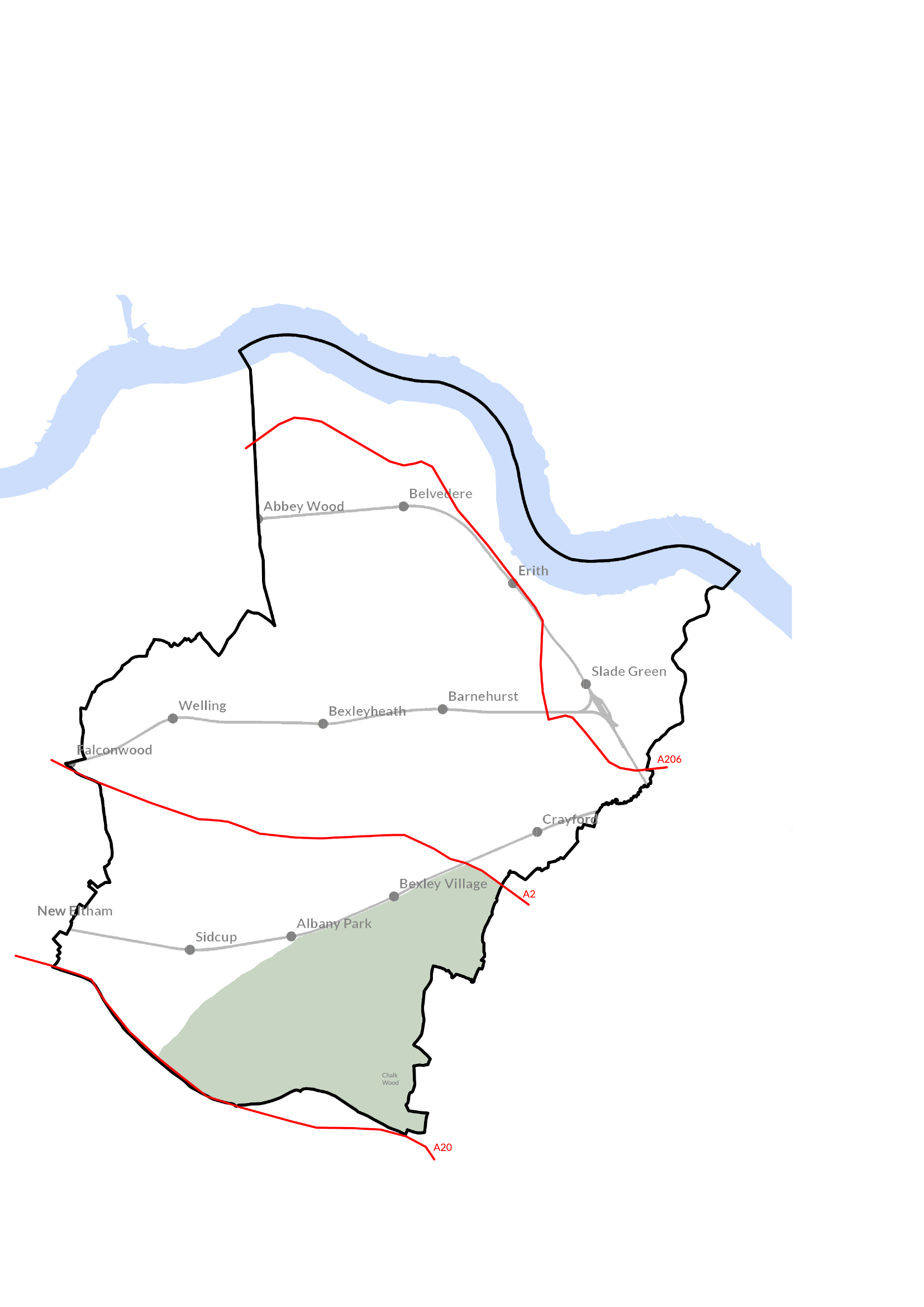
| All proposals within 500m of a pond in the North Cray/Foots Cray area** | Survey of great crested newts, assessment of impacts on newt habitat (terrestrial or aquatic), mitigation proposals |
| All proposals within 50m of a river or where application site includes or adjoins a river | Ecological survey of water voles and otters, impact assessment, detailed mitigation proposals if water voles or otters present, proposals for river enhancements. An 8 metre vegetated buffer is required beside river |
| Within 50m of a drainage ditch in Belvedere or Crayford | Ecological survey of water voles, detailed mitigation proposals if present. An 8 metre vegetated buffer is required beside ditch |
Figure 42
Fig.42 Areas within 200m of woodland, water or known bat feeding areas
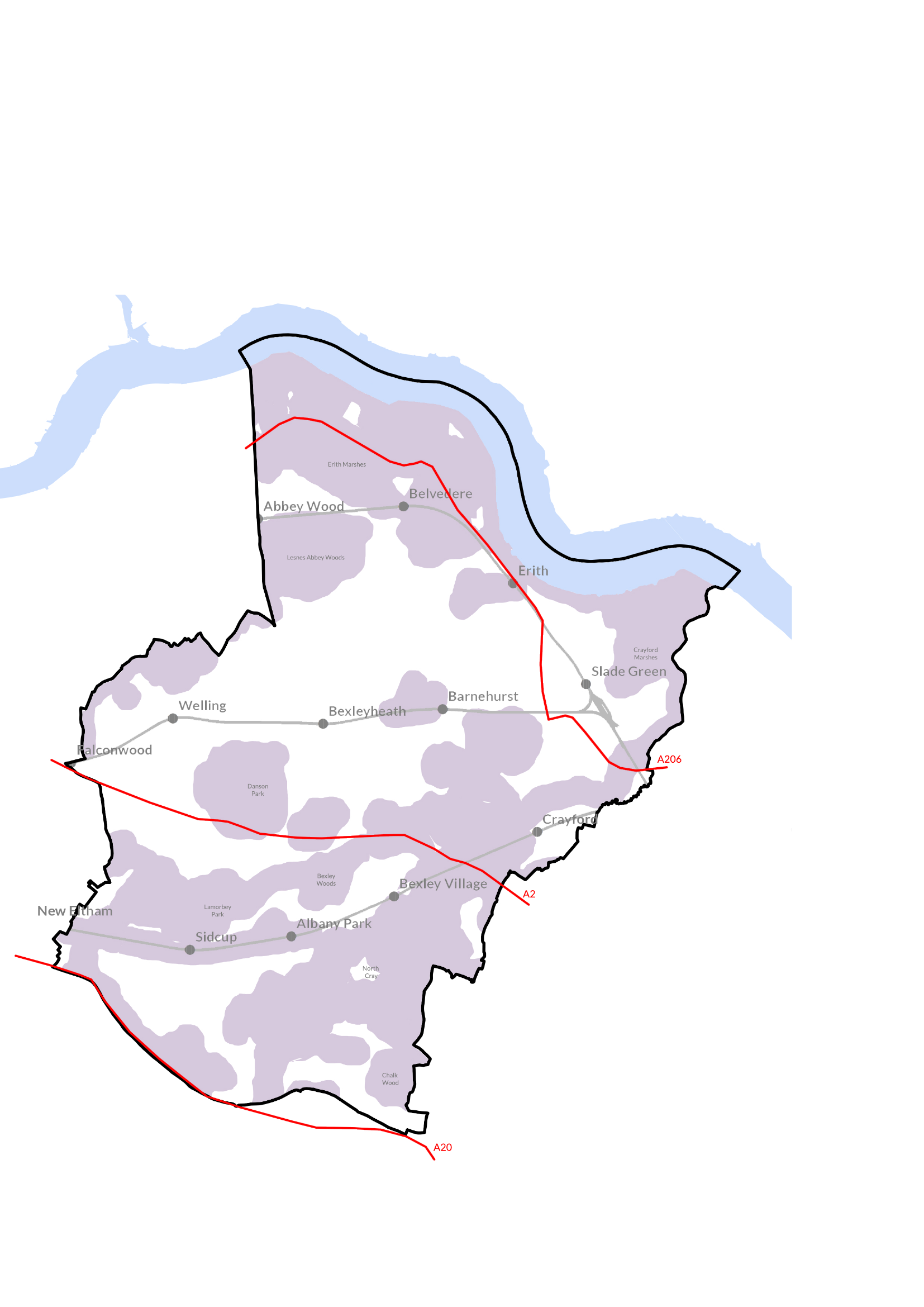
Figure 43
Fig.43 Areas where badgers and great crested newts are highly likely to be found
RIBA Plan of Work Stage 3 - Spatial Coordination (Mitigation hierarchy stage - avoidance/mitigation)
3.19 This is a critical stage whereby nature conservation opportunities and constraints are identified and then accommodated during design development. This aims to create an ecologically orientated and sustainable development.
3.20 There is a risk that some species may be left isolated with no access to suitable foraging areas through a process called fragmentation. As a result of fragmentation, parts of established habitats are lost resulting in smaller, disconnected areas. Applicants should therefore seek to retain and enhance foraging areas or routes (e.g. for bats) or carry out other provisions that contribute towards conservation of the species on or off-site.
3.21 Lighting should be designed to mitigate its potential negative effects on biodiversity. Designers should consider the use of timers or specific coloured lighting to minimise any disturbance to existing habitats. In certain locations, a lighting strategy or specific lighting may be secured by condition. Further guidance on lighting design is provided in the design considerations section on this page.
3.22 Where a development site contains significant features of biodiversity value, irrespective of the development scale, the Council will seek to secure, retain and enhance these features. Applicants should consider how new built structures and landscaped elements can contribute to the delivery of wider ecological benefits and enhancements.
3.23 To demonstrate how biodiversity considerations have been incorporated into a proposal, the submitted plans and accompanying report(s) should clearly detail:
- how the development avoided any impacts
- how the five-point mitigation hierarchy has been addressed; and
- the positive measures for enhancing and developing biodiversity in the proposed development
3.24 In line with the policies and guidance outlined in the policy context section of this chapter, opportunities must be sought for the incorporation of biodiversity into developments and for habitat creation or enhancing existing habitats in all development proposals.
3.25 Habitat Suitability Maps are a resource that can be used to identify opportunities to create new habitats and can contribute to the habitat creation targets in the forthcoming London Local Nature Recovery Strategy (LNRS). The role of a site in buffering or connecting neighbouring or nearby habitats should also be taken into consideration as part of this process.
3.26 Increasing access to nature is a priority and all developments should maximise opportunities to achieve this. A map of Bexley's areas of deficiency in access to nature can be found in the Bexley Local Plan and the Design Principles. Habitat creation should also seek to strengthen the landscape character of the area, as identified in Natural England's London's Natural Signatures project.
3.27 With any adaptation or mitigation options proposed, a Landscape and Ecological Management Plan (LEMP) may be required and secured by condition or legal agreement as outlined in the Handover and In-use section.
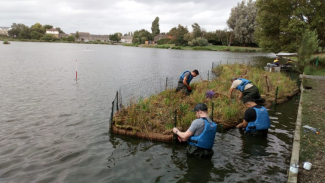
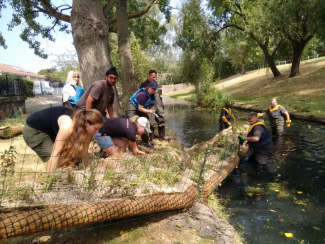
Thamesmead Canal Habitat Enhancement Project, Thamesmead – Thames 21
Aiming to create floating ecosystems throughout the canal system, more than 410m2 of floating habitat islands - including reedbeds - were installed to create islands where native plants can grow whilst enhancing biodiversity. Reedbeds help to filter pollution and the floating islands create wildlife habitats and corridors.
© Thames21
The Clearing, Lesnes Abbey Woods – WonKy
The multifunctional outdoor education space has been created to provide children and young people with access to natural green space for recreation and learning about the local biodiversity thriving within the woodland. The space was co-designed through engagement with a range of local stakeholders to ensure the space reflects the needs of anticipated users.
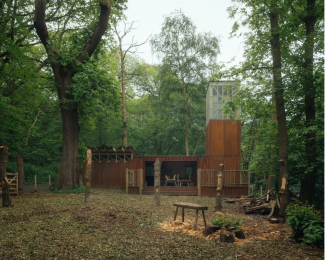
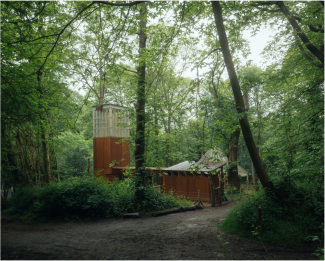
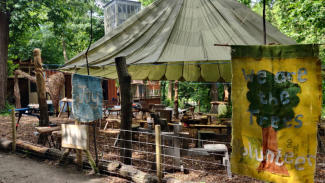
© 1-2: Jim Stephenson; 3: London Borough of Bexley
RIBA Plan of Work Stage 4 - Technical Design (Mitigation hierarchy stage - mitigation)
3.28 Applicants will need to think about how areas of biodiversity value on a development site and in the surrounding area will be protected during the construction phase.
3.29 These measures can be secured through a planning condition or a Construction Environmental Management Plan (CEMP) depending on the proposal and the level of biodiversity that requires protection. Fig.44 sets out what the CEMP should provide.
3.30 As set out in BS 42020, while the format of the CEMP may vary, it should be proportionate and specific to each project.
Figure 44
Fig.44 A Construction Environmental Management Plan (CEMP) should:
- include risk assessment(s) of potentially damaging construction activities
- identify biodiversity protection zones and areas where invasive species have been found
- set out mitigation measures and sensitive working practices including the location and timing of sensitive works
- include a list of responsible persons and their contact details and times when specialists will be on-site
- define and communicate the roles and responsibilities of an ecological clerk of works or appointed ecologist(s) who will manage biodiversity issues on site.
Figure 45
Fig.45 Biodiversity considerations during construction planning
- timing of works to avoid disturbance to species such as birds in the breeding season
- use of protective fencing to preserve important ecological areas and reduce direct damage by fencing off storage areas and areas for construction huts, and carefully planning and limiting their placement
- planning vehicular movements to minimise the impact on ecologically sensitive areas and reduce soil compaction
- in ecologically sensitive areas, keep disruptive elements such as light, noise and human presence to a minimum
- implement measures to protect watercourses and ground water from pollution
- for sites of significant biodiversity value, or its adjoining sites, a Construction Environmental Management Plan (CEMP) to protect biodiversity during the construction phase may be requested and secured by legal agreement or planning condition prior to the commencement of works on site.
RIBA Plan of Work Stage 5 - Manufacturing and Construction (Mitigation hierarchy stage - compensation/enhancement)
3.31 Fig.45 details potential measures that applicants should consider during construction to minimise the impact on existing habitats. Note these are not exhaustive and development sites may generate other, specific considerations.
RIBA Plan of Work Stage 6 - Handover, Stage 7 - In-Use (Mitigation hierarchy stage - enhancement/BNG)
3.32 Applicants should consider how the quality of areas of ecological value that are to be retained, enhanced or created on or around a development site be maintained and managed once the scheme is built out. Where a LEMP has been recommended or identified as necessary, the Council will secure their implementation by either a planning condition or by legal agreement.
3.33 Implementation of the management plan is likely to be a contractor's responsibility and should be considered at the tender evaluation stage. Where the management plan is secured by legal agreement, the developer will be required to report to the Council to evidence that they are implementing the plan.
Biodiversity design considerations
3.34 Development projects can enhance the built environment for wildlife in many ways. The greening of buildings, for example, can make a positive contribution to biodiversity. Buildings can also be enhanced for bats and birds by providing roosting boxes, which can either be built into the fabric of new buildings or retrofitted to existing ones. Street planting can also play a role in providing nectar-rich flowers through trees, planters and hedges.
3.35 All new development should be viewed in the context of the borough's ecological network and must play its part in enhancing biodiversity. Opportunities to improve biodiversity connectivity between green spaces should be investigated as part of the design and layout process. In this respect, regard should be given to green spaces and habitats indicated in Bexley's Green Infrastructure Study and the borough's Sites of Importance for Nature Conservation.
3.36 The ongoing management of landscape and wildlife features should be carefully planned and adequately resourced.
Installing artificial nesting and roosting sites
3.37 The Council expects all new development, residential and non-domestic, refurbishment and retrofit, to incorporate a range of artificial nest and roost sites. The required number will reflect the size and scale of development as set out in the Natural Environment section of the Design Guide SPD Part 1 - Design Principles.
3.38 Artificial nest sites provide nesting and roosting opportunities for birds, bats and some invertebrates. This is particularly important in urban areas where there are fewer natural nesting sites available.
3.39 Invertebrate features can be incorporated through the use of bug boxes and bee hotels or habitat walls. These are discreet features that can be built into the outer skin of cavity wall buildings.
3.40 The type of feature, its location and surroundings will depend on target species. For appearance, durability and maintenance, these features should be integrated into the building fabric to support long-term retention.
3.41 Applicants should avoid installing features near bright lighting, sources of noise and vibration, busy entrances or walkways and windy and exposed corners of the site.
3.42 Fig.46 sets out guidance for specific artificial nesting sites on a development site.
Figure 46
Fig.46 Design requirements for artificial nest sites and habitats
| Type | Height | Orientation | Other design considerations |
|---|---|---|---|
| Integrated bat bricks | 3-5m above ground (and higher where possible) | S/SE/SW |
|
| Integrated bird bricks, such as swift bricks, and nesting features | Tall buildings (over 20m) for peregrine falcons; 6-8m above ground for kestrels; ≥5m for swifts; 2-4m for sparrows and starlings; 1.5-3m for small garden birds such as tits and robins | N/E/NE |
|
| Log piles | Ground | Shaded area |
|
| Bug hotels and invertebrate habitats | Ground - 1.5m | S for solitary bee habitats; Shaded for beetle/woodlouse habitats |
|
Lighting
3.43 Lighting should be designed to mitigate the potential negative impact on biodiversity, whereby it can encourage the displacement and disruption of species.
3.44 Applicants should refer to the ILP Guidance Note Bats and Artificial Lighting at Night and Artificial Lighting and Wildlife - Interim Guidance: Recommendations to help minimise the impact of artificial lighting by the Bat Conservation Trust in association with the Institution of Lighting Engineers (ILE) for further guidance on minimising potential harm caused by lighting.
3.45 Where lighting has the potential to harm biodiversity, timers or specified coloured lighting may be required to minimise any disturbance.
3.46 Where designated sites, protected or priority species and/or habitats are likely to be affected, it is strongly recommended that an ecologist contributes to the development of the lighting strategy, in line with Bat Conservation Trust guidelines.
3.47 Where biodiversity enhancement opportunities have been identified, such as bird boxes such as swift boxes, bat boxes or new landscaping, the impacts of lighting on these will also need to be considered in the design. Applicants should ensure schemes are designed to be wildlife-sensitive and limit the amount of illumination around ecological features, whilst also ensuring the safety of people.
3.48 For certain locations in the borough, a Lighting Impact Assessment may be required to be submitted with a planning application and a lighting strategy or specific lighting may be secured by condition. The need for a Lighting Impact Assessment would normally be identified within a development's ecological report.
Bexley's green spaces
3.49 Much of Bexley is occupied by gardens and the landscaped areas around housing estates, schools, businesses and other premises, with the majority of this providing housing amenity.
3.50 Private gardens can be havens for wildlife, supporting a wealth of birds and insects and often amphibians if there is a pond nearby. Gardens provide essential stepping stones for wildlife between larger green spaces where these cannot be directly linked. Fig.47 references the types of suitable planting within gardens in Bexley, and those to avoid.
3.51 Front gardens should be designed to discourage residents from converting them into car parking areas and it is encouraged that front gardens are planted with suitable trees to simultaneously provide shade and enhance the streetscape. Where parking is provided, it should be designed to minimise the amount of hard landscaping and include greenery.
3.52 Much of the ditch and dyke network in Bexley are located within industrial locations. These provide important habitat for water voles and other amphibians. Landscaping around industrial premises offers an opportunity to retain or create ground level open mosaic habitats as brownfield sites are developed.
3.53 Applicants should consider how to mitigate the impact of new roads on wildlife and biodiversity. Where feasible, vegetative crossing points should be designed near existing commuting routes. The use of eco-passages or overpasses should also be considered for inclusion within schemes.
3.54 All planting proposals should be designed for projected climate conditions over the lifetime of a development, rather than solely for present day conditions.
3.55 Climate resilient species, such as those with demonstrated drought tolerance once established, those that don't require prolonged irrigation beyond the establishment period and those that provide multiple ecological functions such as combined pollen, nectar, berry and nesting value, should be prioritised when preparing planting schedules.
Superbloom, Tower of London – Grant Associates
A meanwhile project to celebrate the Queen's Platinum Jubilee. Its design aimed to prompt further consideration for the potential of urban green spaces in the face of climate change and a need to support and enhance our natural environment. The designers integrated different microclimates, water management systems and considered lighting to complement the ecology present, with materials chosen for their sustainable credentials.
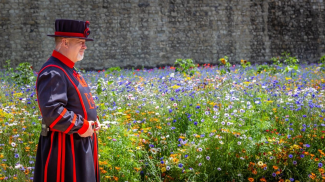
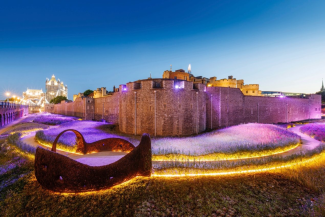
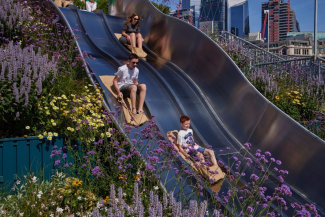
© Alister Thorpe
Figure 47
Fig.47 Planting considerations in Bexley's gardens
- a choice of suitable, native, and non-invasive planting species should be prioritised
- near-native and non-native species may be deemed acceptable in a mixed palette with native species and where it can be demonstrated that the proposed species would have greater climate resilience, long-term viability and ecology function than a purely native palette. Justification for their use will be required and a solely near-native or non-native palette will not be supported by the Council. No species listed as an invasive species under Schedule 9 of the Wildlife and Countryside Act 1981 should be specified.
- following a "right tree, right place" approach meaning planting suitable tree species that are specific to the context and provide environmental benefits
- wildflowers, semi-natural vegetation, rain gardens, and flower-rich perennial planting is encouraged
- Key planting species in Bexley include:
- a. Black poplar,
- b. Lesser calamint,
- c. Bluebells; and
- d. Wild daffodils.
- The use of UK invasive species and those listed on the London Invasive Species Initiative (LISI) - Species of Concern should be avoided. This includes, but is not limited to:
- e. Japanese knotweed,
- f. Rhododendron,
- g. Common ragwort,
- h. Buddleia,
- i. Himalayan balsam; and
- j. Giant hogweed
Greening buildings
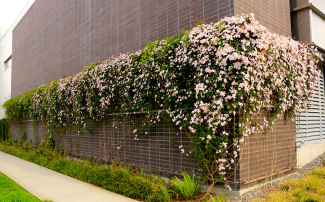
3.56 There are three primary options for introducing greening to buildings - green roofs, façades and living walls. Fig.48 illustrates what some of these options may look like alongside design requirements.
3.57 Due to their maintenance requirements, there is a presumption in favour of green façades rather than living walls. If living walls are proposed, detailed technical drawings must be submitted to support the application, including sections and the depth of the growing medium.
3.58 When proposing green or living facades, applicants should provide an ongoing strategy for maintenance to demonstrate that the longevity of the planting has been considered during design development.
3.59 Green and biodiverse roofs can be designed to cater for many different needs or situations. Due to limited biodiversity gain, sedum only roofs will be considered appropriate only if there is no other viable alternative.
3.60 In general, Bexley's common building typologies are suited to using photovoltaics (PVs) for energy generation, in which case roof space may be required for both PVs and greening. In these instances, biosolar roofs can be specified, which can enhance ecological benefits such as providing wildlife with additional habitat opportunities and helping plants to recolonise following dry weather spells. The panels themselves benefit from the cooling effect provided by the vegetation, optimising efficiency.
3.61 When proposing biosolar roofs, applicants must demonstrate their approach to fire safety and how the proposal has been treated as part of a coherent fire strategy, evident at planning submission stage.
Figure 48
Fig.48 Options for greening on buildings
| Type | Description | Design considerations |
|---|---|---|
| Intensive green roof | These are mainly provided for recreational uses and include landscaping features. Whilst the primary aim is to provide amenity carefully considered planting schemes also provide benefits to local wildlife. |
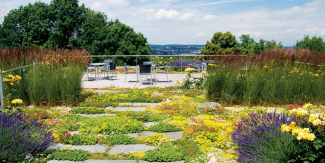
|
| Extensive, biodiverse or biosolar green roof | The main function is to provide habitat for wildlife and they have many other environmental benefits. Biodiverse roofs can include at least 20 different plant species, which usually complement the local area. |
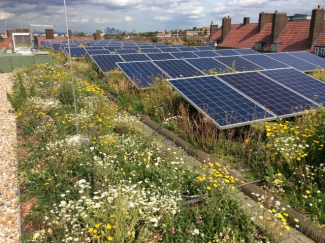
|
| Sedum only roof | Generally used for visual amenity. Sedum species can be used on other green roofs. |
|
| Blue roofs | This is a form of SuDS, where rain water is collected into water tanks on the roof and released at a controlled rate. |
|
| Green façades | Climbing plants are trailed up a wall using a supporting framework such as wires. The low maintenance combined with the high visual effect make green façades a good choice for both new buildings and alterations. |
|
| Living walls | Plants are grown in individual pockets mounted on the wall and irrigated daily using water pumps. |
|